
The Pass System (1885 – 1940s)
In 1885 a pass system was implemented by Indian Affairs officials under the consent of the Prime Minister at the time – John A. Macdonald. The pass system denied Indigenous peoples the freedom to leave their reserves unless a pass or permission slip was signed by the local Indian Agent. This system assisted the goals of the Residential School System by preventing families and parents from visiting their children at these institutions. The strict guidelines, made it difficult for individuals to venture out of their reserve to practice their traditional rights and lifestyles. Failure to adhere to the rules would often result in illegal incarceration and/or fines. In some situations, if an individual was to leave their reserve and not return within the given timeframe, they would lose their Indian status. The Pass System was an illegal practice, kept quiet by the Canadian government and is not talked about in current education. A documentary by director and producer Alex Williams reveals some of Canada’s dark past through the history of “The Pass System”.
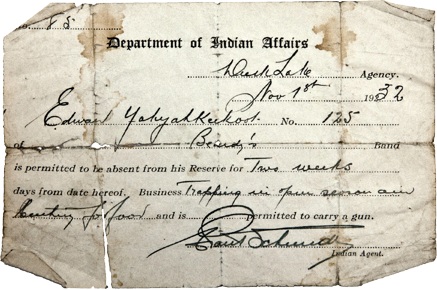
Photo retrieved from: https://www.uregina.ca/external/communications/feature-stories/current/images/fsp-11182015.jpg
The Sixties Scoop
Refers to an era from roughly 1961 to the 1980s where the government of Canada abducted Indigenous children from their families and implemented them into the child welfare system. In most cases, children were taken without the consent of their families or communities. The purpose of forcefully taking these children was to assimilate the younger generations into Euro-Canadian society. The taken children not only lost their families, they also lost their culture, heritage, and language. The Sixties Scoop was another attempt by Canada to assimilate Indigenous peoples into Canadian society. Currently, in Canada, 52.2% of children in foster care are Indigenous but account for only 7.7% of the child population according to Census 2016. This means 14,970 out of 28,665 foster children in private homes under the age of 15 are Indigenous (Statistics Canada, 2021). Results from the 2011 National Household Survey also show that 38% of Indigenous children in Canada live in poverty, compared to 7% for non-Indigenous children.
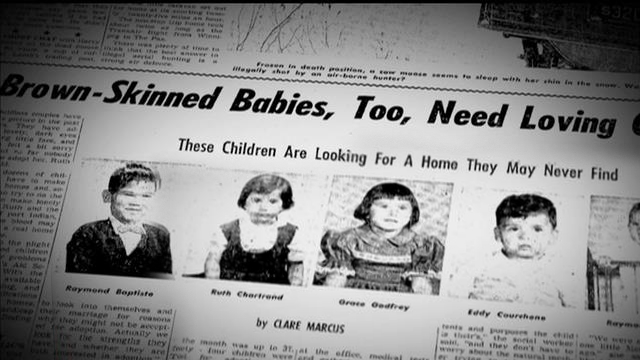
Photo retrieved from: https://www.canadaland.com/podcast/pets-sixties-scoop/
The White Paper 1969
In 1969, Prime Minister Pierre Trudeau and the Minister of Indian Affairs at the time, Jean Chrétien, disclosed a policy that proposed ending the legal relationship between the Canadian Government and Indigenous peoples by dismantling the Indian Act. However, Indigenous leaders across the country did not accept or agree with the proposed policy.
The White Paper was designed to achieve equality among all Canadians by eliminating Indian as a distinct legal status which means Indigenous peoples would lose their unique rights and become average Canadian citizens sharing the same opportunities and responsibilities as everyone else.
Following Trudeau’s vision of a “Just Society,” the government proposed to repeal legislation that it considered discriminatory. The Indian Act was one piece of legislation that was considered discriminatory because it applied only to Indigenous peoples and not to Canadians in general.
The White Paper proposed to:
- Eliminate Indian status
- Dissolve the Department of Indian Affairs within five years
- Abolish the Indian Act
- Convert reserve land to private property that can be sold by the band or its members
- Transfer responsibility for Indian affairs from the federal government to the province and integrate these services into those provided to other Canadian citizens
- Provide funding for economic development
- Appoint a commissioner to address outstanding land claims and gradually terminate existing treaties